Faheem Ashraf Names Suresh Raina as Idol While Taking Swipe at Indian Players
Contents
An Unconventional Inspiration
In the high-pressure world of international cricket, where rivalries often dictate the narrative, Pakistan all-rounder Faheem Ashraf has offered a candid look into his personal development as a player. While many of his peers might stick to the conventional legends of their own country, Ashraf recently opened up about the diverse array of cricketers who helped shape his technique and approach to the game. Among a list of renowned international icons, one name stood out as particularly unexpected: former Indian middle-order maestro, Suresh Raina.
Ashraf’s revelation came during a recent appearance on a YouTube podcast, where he articulated his admiration for players who brought elegance and power to the crease. While acknowledging legends like Saeed Anwar, Chris Gayle, and Kumar Sangakkara, the inclusion of Raina—a close associate of MS Dhoni—sparked immediate conversation across the cricketing world.
The Cross-Border Controversy
However, the praise for Raina was not without its controversial undercurrent. While many fans appreciated the sportsmanship displayed by Ashraf in recognizing an Indian player, the all-rounder also took a direct dig at the current climate of India-Pakistan cricket relations. Ashraf suggested that while Pakistani players are free to openly admire and speak about their Indian counterparts, the reverse is not always true due to political and social restrictions.
Ashraf stated, “My idols with the bat were Saeed Anwar, Gayle, Sangakkara, and Raina. Indian players may have restrictions and perhaps cannot openly talk about us, but we have no issues naming them.” This bold statement has reopened old wounds regarding the lack of bilateral cricket and the diplomatic tensions that have persisted between the two nations, highlighting a frustration felt by many in the professional cricket fraternity.
The Blueprint of a Cricketer
To understand why Ashraf chose these specific players, one must look at their individual impacts on the game. Saeed Anwar, for instance, remains a cornerstone of Pakistani cricketing history. Known as one of the most stylish openers to ever grace the field, Anwar redefined how aggressive batting could be paired with technical finesse. With over 8,800 ODI runs and more than 4,000 Test runs, his influence on a young Ashraf is hardly surprising.
The inclusion of Chris Gayle, the ‘Universe Boss’, highlights Ashraf’s appreciation for the evolution of modern T20 cricket. Gayle’s ability to single-handedly dismantle bowling attacks through sheer power changed the sport’s landscape forever. Similarly, Kumar Sangakkara represented the gold standard for consistency and composure, with over 26,000 runs across all formats combined, serving as a tactical mentor from afar.
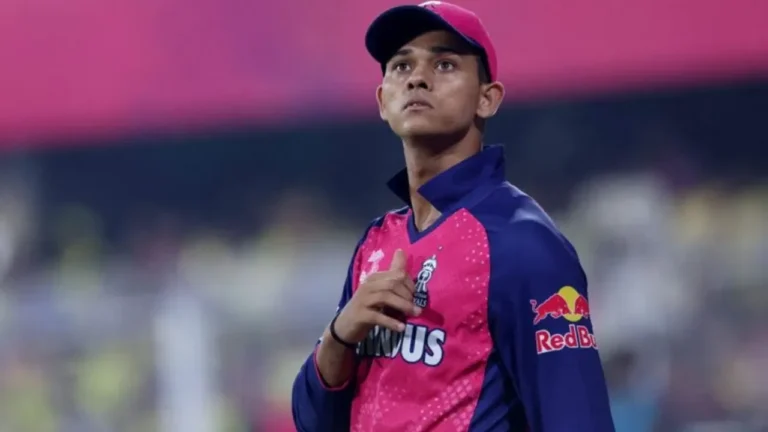
Suresh Raina, meanwhile, was the heartbeat of India’s white-ball success during the MS Dhoni era. His role as a reliable middle-order batter, electric fielder, and part-time spinner made him an invaluable asset. Ashraf’s admiration for Raina speaks to the specific skill set he values: versatility and pressure management.
The Mohammad Asif Enigma
Perhaps the most thought-provoking part of Ashraf’s interview was his choice of bowling idol: Mohammad Asif. Despite the controversies that curtailed Asif’s career, his technical mastery of the swinging ball remains widely respected by experts and players alike. Asif was not a traditional speed merchant, but his ability to make the ball move both ways in the air and off the pitch created nightmares for even the greatest batters of his era.
Ashraf noted, “With the ball, I idolized Mohammad Asif. He was truly inspiring.” This sentiment reflects the professional appreciation for Asif’s craft, acknowledging his unique talent that saw him claim 106 wickets in just 23 Test matches. For an all-rounder like Ashraf, looking toward players who mastered the nuances of the game—whether through power, style, or technical deception—forms the core of his cricketing philosophy. Regardless of the controversy surrounding his comments on India, Faheem Ashraf’s reflection serves as a reminder of how players transcend borders in their pursuit of excellence.