Women’s T20 World Cup: Licthfield, spinners hand Australia big win over South Africa
Australia entered the Women’s T20 World Cup with an unfamiliar shadow of doubt cast over their seemingly invincible status. For the first time since 2017, they arrived at a major tournament without holding a reigning title, prompting speculation about their dominance. However, their opening fixture against South Africa provided a resounding answer, with a commanding all-round display that effectively quelled such theories. A dynamic performance from Phoebe Litchfield, supported by crucial cameos from Georgia Wareham and Annabel Sutherland, propelled Australia to a formidable total of 172 for 8. This strong batting effort was then expertly complemented by their potent four-pronged spin attack, which meticulously dismantled the South African batting line-up. The result was a comprehensive 65-run victory, significantly boosting Australia’s net run rate and setting a clear statement of intent for their tournament aspirations. South Africa, who came into the campaign as one of the favoured contenders, suffered a jolting start, being bowled out for a mere 107 – their second-lowest T20I total against Australia in a completed innings.
Contents
Litchfield’s Explosive Start Sets the Tone
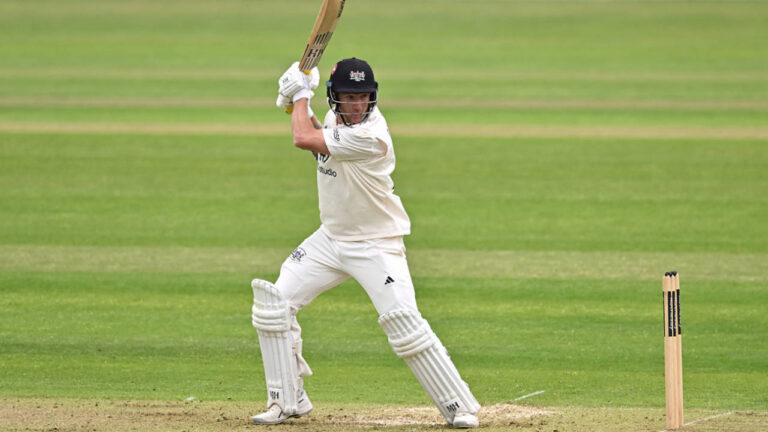
The initial phase of Australia’s innings presented a stern challenge, as South Africa’s formidable new-ball pairing of Marizanne Kapp and Shabnim Ismail, recently reunited following Ismail’s reversal of retirement, delivered an exemplary performance. They swiftly accounted for Australia’s openers inside four overs, maintaining a tight leash on the scoring rate with their subtle yet effective movement of the ball. However, the young Phoebe Litchfield, renowned for her fearless approach, was not one to be intimidated. Displaying remarkable composure and aggression, she ingeniously shifted gears. Litchfield employed her footwork with precision, stepping out to hit Kapp for consecutive boundaries in the penultimate over of the powerplay. This assault continued into the next over, where she targeted Ismail, unleashing a sequence of 4, 4, 6, which dramatically accelerated Australia’s scoring. This burst of scoring ensured Australia concluded the powerplay in a dominant position at 52 for 2, defying the early setbacks and injecting much-needed momentum into their innings. Litchfield’s rapid scoring was particularly noteworthy given she had missed Australia’s final warm-up game due to a quadricep issue. In her first significant outing of the tournament, she blazed her way to a 23-ball half-century, a testament to her readiness and form. Her exceptional innings, a fluent 50 off just 24 deliveries, eventually came to an end courtesy of a well-executed change-up from Ayabonga Khaka. At the point of her dismissal, the rest of the Australian batters, along with extras, had contributed a mere 11 runs off 17 balls, underscoring the singular impact of Litchfield’s brilliance.
Middle Order Contributions and Late Flourish
Following Litchfield’s departure, the onus fell on the middle order to sustain the momentum. Ellyse Perry played a vital role, contributing a composed 36 runs, stabilising the innings and ensuring that Australia did not suffer a collapse. Her experience proved crucial in navigating through the middle overs against a South African attack that, despite Litchfield’s earlier onslaught, was still capable of picking up wickets. Georgia Wareham, known for her all-round capabilities, provided a crucial late impetus with a quickfire cameo. Her ability to find boundaries at critical junctures helped Australia push towards a competitive total. Similarly, Annabel Sutherland showcased her power-hitting prowess, adding valuable runs in the death overs. These contributions were essential in transforming what could have been a par score into a challenging target of 172 for 8, demonstrating Australia’s batting depth and their collective ability to recover and accelerate.
Spinners Wreak Havoc on South Africa
With a substantial total on the board, Australia’s strategy revolved around their formidable spin quartet, and they executed their plans flawlessly. The South African chase began with a sense of urgency, but it quickly became apparent that navigating Australia’s spin would be a monumental task. Georgia Wareham, who had earlier contributed with the bat, turned destroyer with the ball, claiming an impressive 3 wickets for just 13 runs. Her leg-spin proved unplayable for several South African batters, creating crucial breakthroughs and stifling any attempts at building partnerships. Sophie Molineux, with her left-arm orthodox spin, complemented Wareham perfectly, maintaining relentless pressure and chipping in with 2 wickets for 17 runs. Alana King, the third frontline spinner, also made her mark, picking up 2 wickets for 26 runs, further tightening the screws on the Proteas. The collective effort of these three spinners, combined with their subtle variations and tactical acumen, systematically dismantled the South African batting line-up. They exploited the slow nature of the pitch to perfection, extracting turn and bounce that proved too much for the opposition. The South African batters struggled to rotate the strike, leading to an accumulating pressure that eventually resulted in a flurry of wickets.
South Africa’s Struggle and Wolvaardt’s Lone Fight
South Africa’s innings was characterised by a general struggle, with only Laura Wolvaardt showing significant resistance. Wolvaardt, a key batter for South Africa, fought a valiant but ultimately solitary battle, top-scoring with 44 runs. However, the lack of support from the other end meant her efforts were largely in vain. The relentless pressure from Australia’s bowlers, particularly the spinners, ensured that no significant partnerships could materialise. The Proteas found themselves behind the required run rate from an early stage, and as wickets tumbled, their chase became increasingly desperate and ultimately futile. Being bowled out for 107 meant South Africa registered their second-lowest total against Australia in T20I history, a stark reminder of the challenge they faced and the dominant performance put forth by the Australians. This outcome delivered a significant jolt to a South African side that had entered the tournament with high hopes and a strong reputation.
Conclusion: A Statement Victory for Australia
The 65-run victory was more than just a win; it was a powerful statement from Australia. It not only provided a crucial boost to their net run rate, which could be vital in the latter stages of the group stage, but also reasserted their position as a formidable force in women’s cricket. The performance demonstrated their incredible depth, with contributions coming from various players, from Litchfield’s explosive start to the clinical precision of their spin attack. For South Africa, the defeat serves as an early wake-up call, highlighting areas that require immediate attention as they look to regroup and salvage their campaign in the tournament. Australia’s opening match performance was a clear signal that any doubts about their invincibility were premature, and they remain very much the team to beat in the Women’s T20 World Cup.